Friday, March 25, 2011

Experiment in Laser Sintering


While in Limoge, France, I found this technology at the Royal Limoge Factory, used primarily on the bottom of work to fire on the factory name. The group then visited the Cerlase company to see where they make the laser for this purpose. I found out that the material used is distributed in the US by Ferro. I was able to order a sample and tested it at the UF Fab Lab.

I sprayed the material on to commercial porcelain tiles. I gave them an overnight to dry. Ferro has very detailed specs on the technique. I worked with Dan Tankersley, who put an Illustrator file together to run the test. The cutter fired the overglaze material on to the tile. After washing, the unfired overglaze is removed to reveal the fired overglaze. The advantage is the imagery you can develop through Illustrator and that you can eliminate the "third firing."
I have since ordered more colors from Ferro. Stay tuned for future tests.

Friday, January 7, 2011

Latest work


The last two posts described the process I used to create models through 3 D scanning and 3 D printing. Molds were made from these models and porcelain slip cast for the objects. The porcelain pieces were made in Hungary this past summer with Herend porcelain. I shipped the work home where I applied and fired luster and decals. I wanted them to be both contained in a box and also displayed with the box and corresponding collage. The collage is actually a collaboration with my father, long deceased but with the use of a flat bed scanner, I took some of his drawings scanned and printed them on archival paper. I layered other images, leaves and hearts, both ambiguous and similar forms, to complete the collages. The boxes are made of museum board, cut and scored on a laser cutter.

3 D Printing


Once the objects are scanned and finalized, the file is downloaded to the computer attached to the Object 3D printer. This printer is of high quality, printing an object using a resin with forty jets. The support material has no binder and is basically power washed off to leave the hardened model. I have been using these models to make molds for slip casting. The next blog will show you some of the work I made using this process.

3 D Scanning


I have been working in the University of Florida Art and Architecture Fabrication Lab, with Dan Tankersley, MFA DIgital Media. We have been scanning natural objects then manipulating and finalizing the file. The scanner relies on reflective dots to find the object it needs to scan. SOme objects scan easier than others. The scanner is not thrilled with rough textures and undercuts. These photos are of the scanning process. The next blog post will cover the printing.

Sunday, November 21, 2010

IAC Paris 2010


The International Academy of Ceramics Assembly was held in Paris this past September. We met at UNESCO, as we are an affiliate member. Major works of art were inside and out of this amazing building. The participants were welcomed by the Mayor's Cultural attache at City Hall, a spectacular baroque building. Once again a champagne toast! We had interesting panels, visited numerous shows and museums. There was a boat trip on the Seine to go to the Museum of Decorative Arts. We topped off the event with a dinner night cruise on the Seine. Spectacular! A few us of stayed on a couple days to visit more shows, like Bai Ming' s and to attend the antiquities fair at the Grande Palais.
Paris is so beautiful!

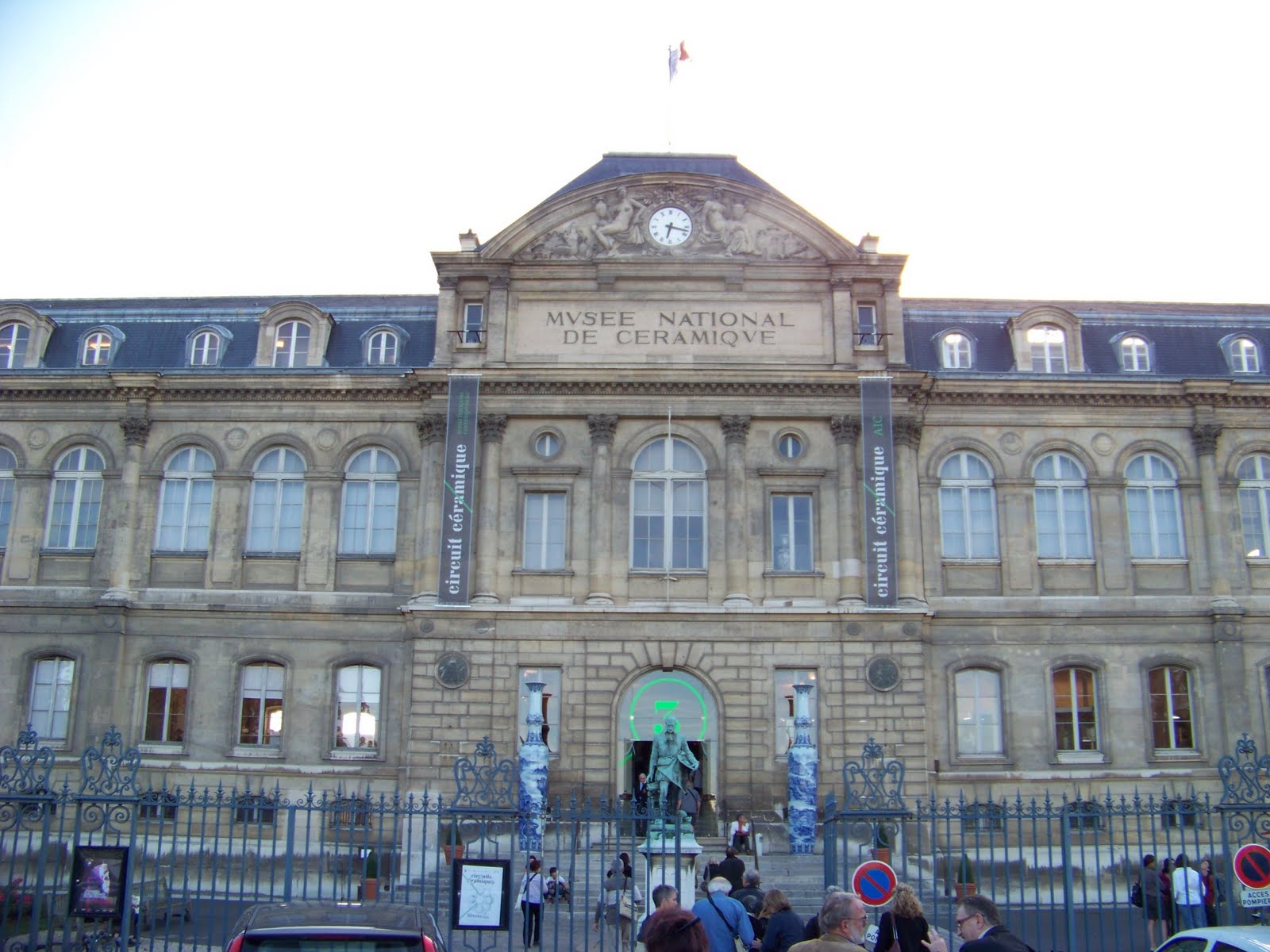
Sevres, Paris 2010


As a major part of the IAC meeting in Paris in September, we had our members' exhibition in the Sevres Museum. The installation left something to be desired but the work was excellent. Always great to see the diversity of the work from our colleagues around the world.
The Sevres Museum is right behind the museum. It is 80% supported by the French Government and so they can meet their mission of preserving their traditional techniques. They toured us and shared their technical knowledge in a very generous way.

Sunday, October 3, 2010

The IAC Pre-tour continues in the Limoges region


The Limoges area is famous for its porcelain. In 1768, a source for high quality kaolin was discovered and set the gears in motion for world famous porcelain factories to settle in the region. Even today, the area supplies many other factories in Europe with high quality materials as well.

The first factory we visited was that of Royal Limoges. Production is slowly dwindling at this factory, which does not seem to be able to compete with more state of the art factories. The Bernardaud Porcelain factory was bustling in comparison, the quality of its product far superior. We had an excellent factory tour and their museum had an exciting show of contemporary work in porcelain. We had a lovely lunch at the factory restaurant.

Our next stop was the Cerlase Company who is making equipment for state of the art laser sintering (glazing). Yes, a laser is used to “fire” the china paint design on to the ceramic piece, eliminating a third firing. I have followed up on this technique and I am awaiting samples to try in the UF Fab Lab. Very exciting technology!

There was an academic side to the program when we went to the National Academy of Art in Limoges and listened to colleagues talk about the current state of ceramics education at their institutions. Tapio Yli Viikari from Finland is going through major curricular changes at his university that hold a good deal of promise. Torbjorn Kvasbo from Norway , Daphne Corregan, Monaco, Jim Romberg, USA and Bastiene Kramer, France all spoke to contemporary issues.

We visited the Musee National Adrien Doubouche with historical collection of ceramics, including porcelain produced in the Limoges region. The Director of the Museum, Chantal Meslin, then walked us over to an exhibition hall, which had a wonderful show she curated with an interesting theme. She partnered with 12 ceramics museum in ceramics cities around the world, many of which I have had the privilege of visiting such as Jingdezhen, China, Icheon, South Korea, Stoke-on-Trent, England and Faenza, Italy. The show connected these 12 cities with commonalities in technique, form and decoration. The show was beautifully displayed and made its point well. Her tour was most informative.

On the last day, with a stop at an old brick and tile factory now a residency center on the way, we traveled to Paris for the IAC Assembly that would start the next day.

I want to take this opportunity to thank Jacques Kaufmann who was out “fearless” leader and besides organizing the trip and making sure things happened as they should, he made sure we were all on the bus when leaving!