Sunday, November 21, 2010

IAC Paris 2010


The International Academy of Ceramics Assembly was held in Paris this past September. We met at UNESCO, as we are an affiliate member. Major works of art were inside and out of this amazing building. The participants were welcomed by the Mayor's Cultural attache at City Hall, a spectacular baroque building. Once again a champagne toast! We had interesting panels, visited numerous shows and museums. There was a boat trip on the Seine to go to the Museum of Decorative Arts. We topped off the event with a dinner night cruise on the Seine. Spectacular! A few us of stayed on a couple days to visit more shows, like Bai Ming' s and to attend the antiquities fair at the Grande Palais.
Paris is so beautiful!

Sevres, Paris 2010


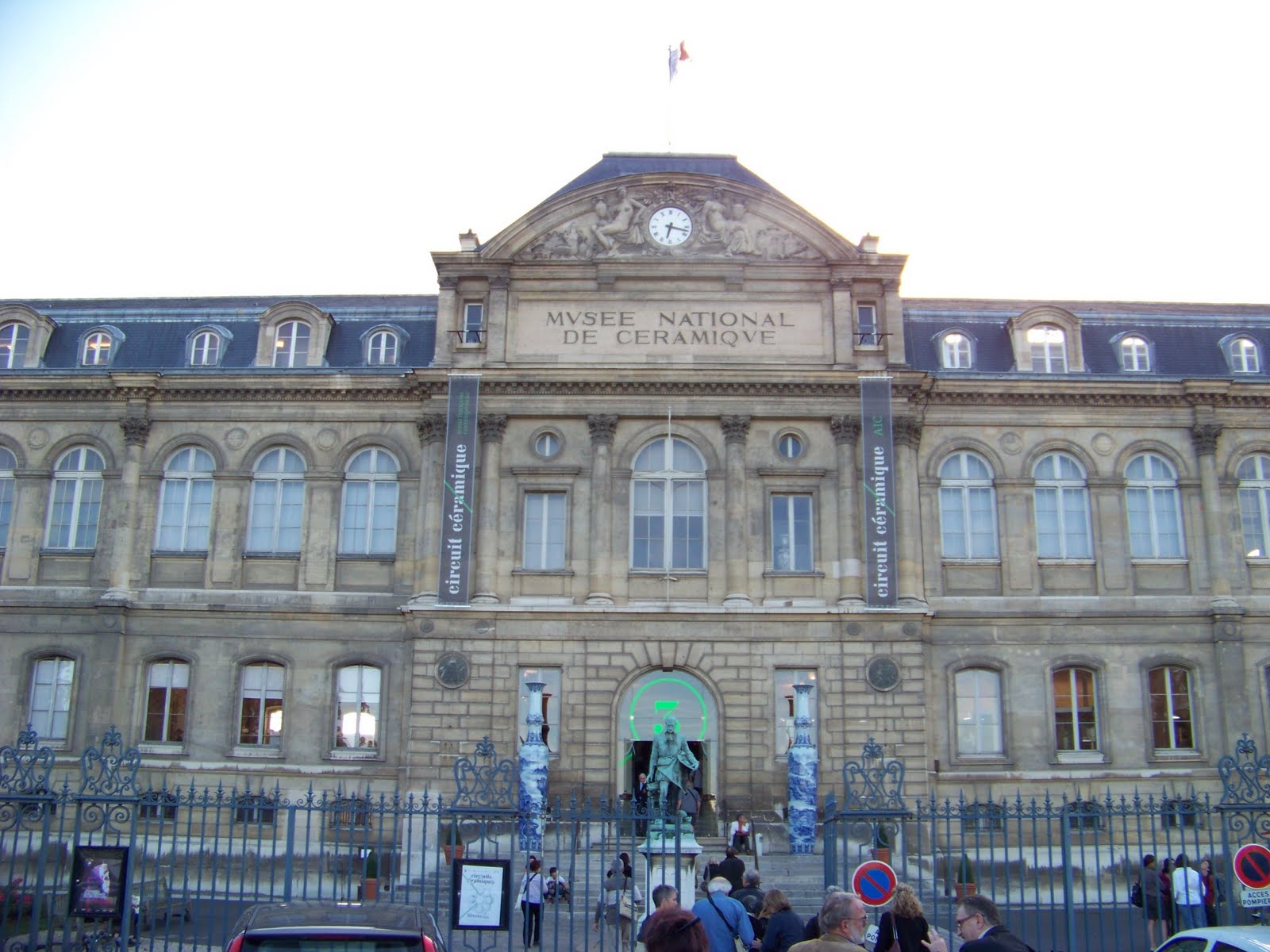
As a major part of the IAC meeting in Paris in September, we had our members' exhibition in the Sevres Museum. The installation left something to be desired but the work was excellent. Always great to see the diversity of the work from our colleagues around the world.
The Sevres Museum is right behind the museum. It is 80% supported by the French Government and so they can meet their mission of preserving their traditional techniques. They toured us and shared their technical knowledge in a very generous way.

Sunday, October 3, 2010

The IAC Pre-tour continues in the Limoges region


The Limoges area is famous for its porcelain. In 1768, a source for high quality kaolin was discovered and set the gears in motion for world famous porcelain factories to settle in the region. Even today, the area supplies many other factories in Europe with high quality materials as well.

The first factory we visited was that of Royal Limoges. Production is slowly dwindling at this factory, which does not seem to be able to compete with more state of the art factories. The Bernardaud Porcelain factory was bustling in comparison, the quality of its product far superior. We had an excellent factory tour and their museum had an exciting show of contemporary work in porcelain. We had a lovely lunch at the factory restaurant.

Our next stop was the Cerlase Company who is making equipment for state of the art laser sintering (glazing). Yes, a laser is used to “fire” the china paint design on to the ceramic piece, eliminating a third firing. I have followed up on this technique and I am awaiting samples to try in the UF Fab Lab. Very exciting technology!

There was an academic side to the program when we went to the National Academy of Art in Limoges and listened to colleagues talk about the current state of ceramics education at their institutions. Tapio Yli Viikari from Finland is going through major curricular changes at his university that hold a good deal of promise. Torbjorn Kvasbo from Norway , Daphne Corregan, Monaco, Jim Romberg, USA and Bastiene Kramer, France all spoke to contemporary issues.

We visited the Musee National Adrien Doubouche with historical collection of ceramics, including porcelain produced in the Limoges region. The Director of the Museum, Chantal Meslin, then walked us over to an exhibition hall, which had a wonderful show she curated with an interesting theme. She partnered with 12 ceramics museum in ceramics cities around the world, many of which I have had the privilege of visiting such as Jingdezhen, China, Icheon, South Korea, Stoke-on-Trent, England and Faenza, Italy. The show connected these 12 cities with commonalities in technique, form and decoration. The show was beautifully displayed and made its point well. Her tour was most informative.

On the last day, with a stop at an old brick and tile factory now a residency center on the way, we traveled to Paris for the IAC Assembly that would start the next day.

I want to take this opportunity to thank Jacques Kaufmann who was out “fearless” leader and besides organizing the trip and making sure things happened as they should, he made sure we were all on the bus when leaving!

Saturday, September 25, 2010

IAC Pre-Tour: Bourges, France


I have been home from France for about a week now and still nursing a cold I brought back with me like a cheap souvenir. I have been remiss in adding this wonderful and amazing part of my porcelain pilgrimage to my blog.

I will begin here with the Pre-tour of the IAC Assembly. With our “fearless leader” Jacques Kaufmann at the front of the bus and the Atelier d’Arte staff, as well as our travel agents, about 25 of us from a large variety of countries were taken on an interesting pottery tour of the beautiful areas of Bourges and Limoges.

I will begin with the first couple days we spent in Bourges. My blog will in no way be able to cover all the wonderful things we saw and people we met. Consider this an abbreviated tour. The group met at UNESCO where our assembly took place (ore on that later) and headed south to Bourges for a four hour bus ride.

We were warmly greeted at the new Le Bourne Center for Ceramics Creation, which has a gallery, shop and meeting area. The show on display of French ceramics from the area was beautiful displayed. We had out first meal there and it gave us a sampling of the great foods and wine we would have on the tour. The next day we visited a number of the studios in Le Bourne. This is a pottery town where many visitors come to shop. The artists typically fire stoneware in wood kilns. There is a charming Pottery Museum in an old church that we also visited.

Later in the day, we were received (more champagne!) at the City of Bourges Departmental Council in what was once part of a historic castle. The Mayor described the importance of ceramics to the area. Nice to hear!

The following day we went to Nancay to visit the Capazza Gallerie. Wow! Once an old army barrack on a majestic estate, the Capazza family renovated the space into an exciting and vibrant gallery space. The show was very of the highest quality. Once again, champagne and a toast were given to celebrate our visit! I recommend their website:

www.capazza-galerie.com

There is a porcelain factory in the area, Pillivuyt, and we had a tour and visited their enter. The factory seemed vibrant and busy. The work is done mostly in decals and some hand decorating.

Another delicious meal ended our day as well as our visit to the area. The next day and next blog entry will be on Limoges.


Thursday, August 5, 2010

Richard Ginori Manufacture and Museum, Florence


It felt great to be back in Florence, even though it seemed hotter, more full of tourist and a bit dirtier than usual this time. I had a prearranged appointment for a factory and museum tour at Richard Ginori in Sesto Fieorentino, just north of the city. The people there were very open and allowed pictures and want to spread the word about their amazing production, which began in 1735. They have an interesting history, originally making clay slip casts from bronze sculptures. They moved with the times through the centuries and expanded to make dinnerware as well as sculptures. The do a good amount of hand painting even today but they are the masters of the decal. I met the heads of the four main areas - design, mold making, hand decorating and silkscreen printing.

The curator then toured me through their museum. We took a lunch break and I was treated to lunch in the employee cafeteria. So gracious! The museum is arranged chronologically, which was very interesting in order to see how the production changed through the years. They had a room devoted to their major art director from 1923 - 1930, Gio Ponti (also well known as an architect). I am a huge fan of Ponti ceramics and to see so much of it in one place was an exceptional experience.

Overall, it was an overwhelming experience in terms of new things seen and learned.

Saturday, July 31, 2010

London's VIctoria and Albert Museum - WOW


I have been to this museum before and went with some hesitancy as the rooms and rooms of ceramics in old Victorian cabinets, stacked high and rather randomly, would be gone and a remodeled collection would be in its place. I loved those old rooms!

I missed seeing the Queen when she dedicated the new galleries just a couple weeks before. I was more than pleasantly surprised. I could have set up a cot and lived there a week or so to give all the rooms and rooms of work justice in my review. Alas, I only had one full day.

I am focusing on the historic as that was my research agenda, but the study collection goes to contemporary artists and there was a terrific show of contemporary British ceramic artists and one of Richard Slee’s work. Other favorites like Lucy Rie (her studio is reproduced in one of the galleries) and Hans Coper were well represented. Leach, Cardew and Hamada as well. There is a ceramics studio in the room dedicated to ceramic techniques that offers classes and there is a Visiting Artist set up working for 6 months at a time for visitors to watch.

They have a study room and you can make arrangements ahead to have work set up in a room for you to touch and research. Not all, but much of the collection is on line now so it is relatively easy to get information.

This is a must see museum for any serious study in ceramics. They have, as the Brits tend to, some of the best of everything from around the world. It is a stunning collection and it is out for all to see!

Saturday, July 17, 2010

Staffordshire Pottery in Stoke on Trent, England


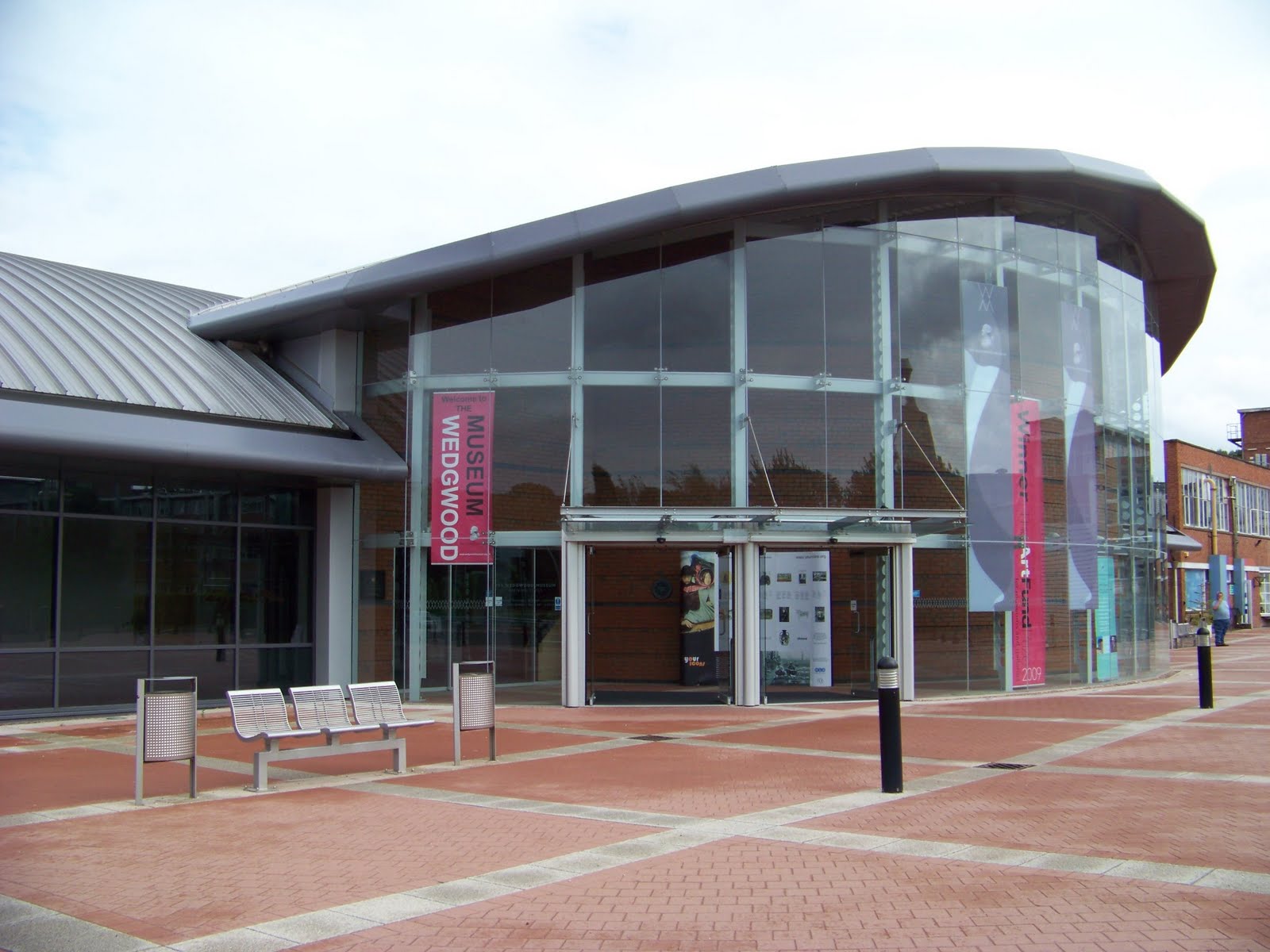
My visit to Stoke started with a most amazing experience – a private tour of the Wedgwood Factory by one of its managers. I was able to see every part of their production. Their diversity of techniques and products made for a fascinating and instructive tour. I then spent the rest of the afternoon in the award winning Wedgwood Museum. No pictures allowed in either place. The afternoon was well work the trip!

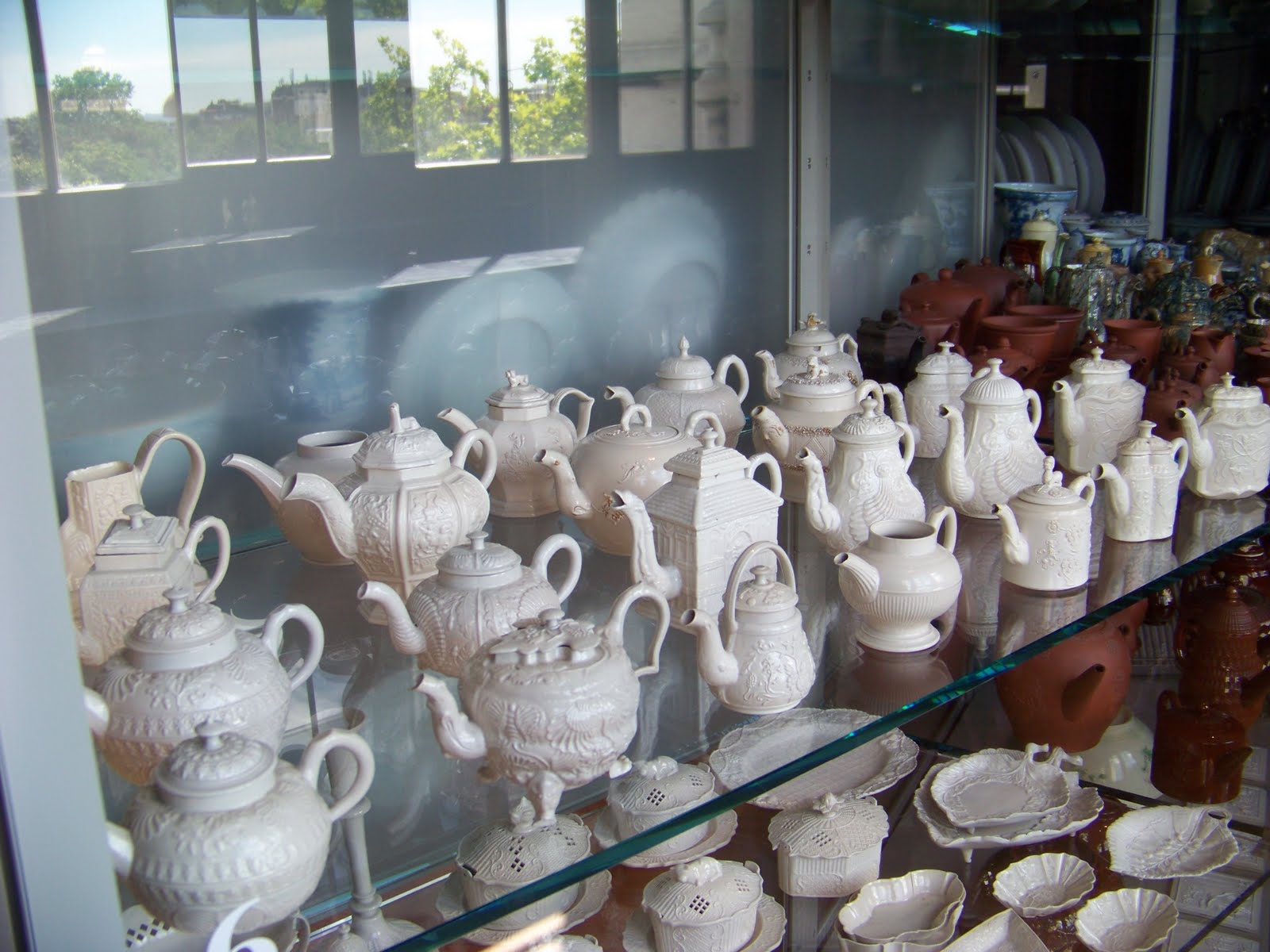
The next day I went to the Potteries Museum. It has an excellent collection of Staffordshire pottery and allowed pictures. Lack of labels was a bit frustrating but the rooms of display are great. They also have a special collection of British Studio pottery including such noteworthy potters as Leach, Cardew, Rie, Coper, etc.

From there I walked through the town center to the Dudson Museum. The kiln is located inside one of the original pottery’s bottle kiln! You have likely not heard about them but you very possibly have used their wares. In the 1800’s they made typical Staffordshire ware. The owner realized demand was waning and so found a niche market in “caterer ware” or what we call restaurant ware. They make dinnerware for hotels, ocean liners and even Disney.

Today I went to the Gladstone Pottery Museum, which is actually a “living” museum. It was a Victorian pottery and saved from demolition when it closed in the 1970’s. There are 5 bottle kilns on the property, demos and recreations of the original pottery’s functions. It was very interesting and informative.

Stoke on Trent as a town is depressed due to many of the potteries closing and factories moving production to Asia. Many of the famous potteries have merged, for example Wedgwood with Royal Dalton and Spode with Portmeiron. I am ready to move on to the exciting city of London tomorrow.